

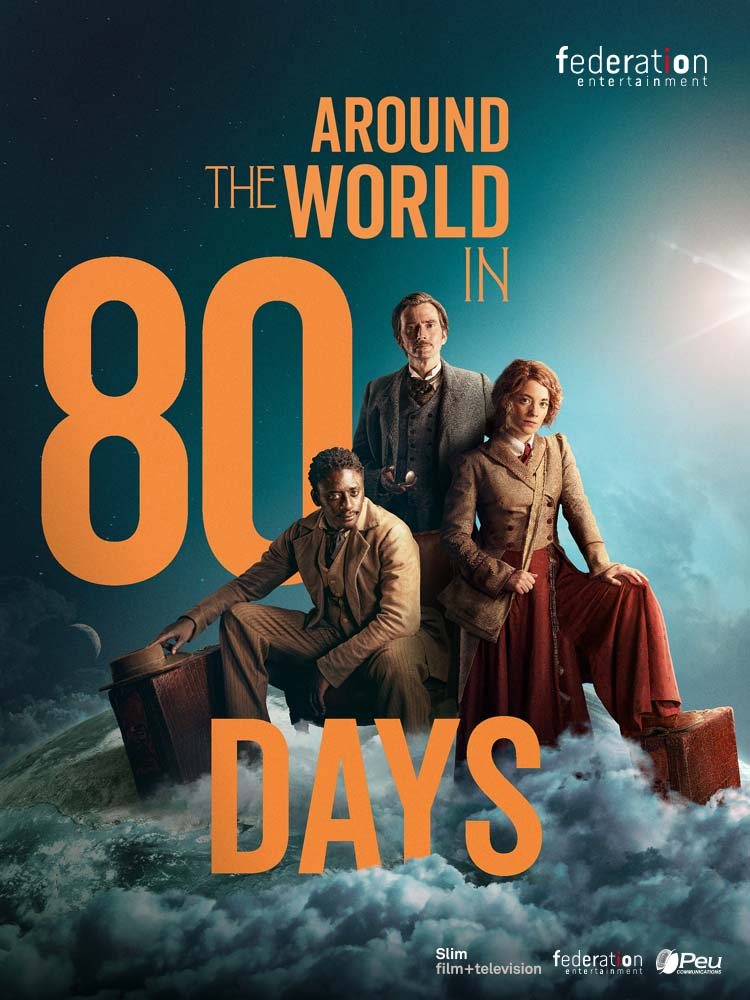
Around the World in 80 Days — sound for the series
Around the World in 80 Days is a spectacular period adaptation of the classic Jules Verne novel, with David Tennant as Phileas Fogg. The series takes the viewer on a journey around the world of the late 19th century — from London clubs, through trains and ships, to deserts and distant cities. It is a genre in which sound has to build an entire world the viewer has never heard with their own ears.
Recognition: This international production (BBC / France TV, among others), starring David Tennant, had its world premiere at Canneseries 2021. On an adventure production of this scale, it is sound and post-production that carry the weight of credibility — from recreating the sound of the era to building the dozens of travel ambiences that let the viewer truly cross continents.
The role of sound and post-production
A period-set travel series is one of the most labour-intensive tasks in sound post-production, because every episode is practically a separate film — different geography, different backgrounds, different vehicles and languages. Here the sound layer is built from scratch on several levels.
The first is recreating the sound of the era. Steam engines, carriage wheels on cobblestones, whistles, the mechanisms of steamships, the crush of marketplaces — these are all sounds that no longer exist in everyday life. They have to be recreated from libraries, archives and our own recordings, and then refined so that they sound not only historically credible but also cinematically compelling. The viewer knows the 19th century mainly from imagination, so the sound has to fulfil that imagination.
The second level is ambiences and geography. Every location needs its own sonic signature: London fog sounds different from desert wind, a port different from a mountain trail. It is ambiences that create the impression of movement and distance — the sense that the characters really are crossing continents.
The third is dialogue editing, ADR and multilingualism. On a journey around the world, different languages and accents appear, and the dialogue must remain intelligible despite the rich backgrounds. This is the layer closest to the viewer: dialogue editing tidies and cleans the original lines, while ADR supervision (automated dialogue replacement) means planning and running the re-recording sessions in which actors re-voice lines that cannot be salvaged from set — so that they blend into the original invisibly, scene after scene, across the whole season.
The All In Sound approach
On a production as large and international as Around the World in 80 Days, the sound is handled by a multi-person post-production team, with each member responsible for their own slice of the craft. Olga Pasternak , a sound editor who is today a co-founder of All In Sound, worked on this series as ADR supervisor and dialogue editor — that was her role on this particular production, not the sound of the whole series.
ADR supervision and dialogue editing are among the most demanding tasks on a production of this scale. Dialogue editing means organising and cleaning the original lines recorded on set — removing noise, joining takes, evening out the tone, so that the dialogue carries the scene despite rich backgrounds. ADR supervision, in turn, is organisational and directorial work: spotting the lines that cannot be rescued from the original, planning the re-recording sessions, guiding the actors as they re-voice their lines, and matching those new lines so precisely that they blend into the scene unnoticed. A journey around the world adds multilingualism and a wealth of accents, raising the bar further still.
It is exactly this experience from working on large productions that Olga brings to All In Sound today. We work in a 5.1 editing/mixing room at a standardised monitoring level, with a 4 TB sound library as a starting point. But the true quality of a period series is only born from hands-on work on detail — precise dialogue editing, patient matching of ADR takes, refining every transition between worlds.
Planning an adventure series, a period production or a film that requires building whole sonic worlds? See our projects and let’s talk about working together .
Frequently asked questions
What does sound for a period drama series involve?
Recreating the sound of the era: steam locomotives, ships, marketplaces and 19th-century cities. The sound has to be historically credible and, at the same time, cinematically compelling — because the audience knows these places mainly from imagination.
Why is a travel series a sound challenge?
Because every episode is a new world: different geography, different ambiences, different vehicles and languages. You have to build dozens of credible spaces and keep the whole series sounding consistent.
What was Olga's role on this series?
On Around the World in 80 Days, Olga Pasternak worked as ADR supervisor and dialogue editor — overseeing ADR and editing the dialogue as part of a large international post-production team. It is experience from her career that she now brings to All In Sound.