

What is sound design?
In short: Sound design is the crafting of sounds that are not in the on-set recording — the effects, ambiences and textures that build the sound world of a film, game or advertisement. It is what gives an image depth, emotion and believability.
When you watch a film, most of the sounds you hear were not recorded during shooting. Footsteps, a creaking door, city noise, a futuristic interface or thunder in the background — all of it is the work of a sound designer. Sound design is the art of building a sonic reality that seems obvious, even though it is created entirely in the studio.
Sound design — definition
Sound design is the process of crafting, creating and selecting the sounds that make up a production’s audio layer. It covers sound effects, ambiences, textures and the entire sonic space. The sound designer decides how the depicted world sounds — and makes the viewer believe it, without them even noticing the work involved.
Sound design is made up of four main elements:
- Sound effects (SFX) — spot sounds tied to the action: a gunshot, an impact, a click.
- Foley — sounds recorded in sync with the picture: footsteps, the rustle of clothing, handling objects.
- Ambiences (backgrounds) — the layer that builds space: a forest, a busy restaurant, a city at night.
- Designed sounds — sonorities that do not exist in reality: a spaceship, magic, a future interface.
At All In Sound , dialogue editing, ADR and sound editing are handled by Olga, who has worked with Nicolas Becker and as an ADR and dialogue editor on productions such as Lupin, Infiniti and 80 Days. We draw on a 4 TB sound library and our own recordings, and we deliver everything in Pro Tools Ultimate.
What does sound design consist of?
Sound effects (SFX)
Specific, spot sounds tied to the action — a gunshot, an impact, a click, the sound of a device. They may come from a library, from our own recordings, or be designed from scratch out of many layers.
Foley
Sounds performed and recorded in sync with the picture — footsteps, the rustle of clothing, the handling of objects. Foley adds realism and physicality to characters and scenes.
Ambiences and backgrounds
The layer that builds space and location — the murmur of a forest, the hum of a restaurant, the emptiness of a city at night. It tells the viewer where they are before they see any detail.
Designed sounds
Elements that do not exist in reality — the sound of a spaceship, magic, a monster or a future interface. They are created by combining, processing and synthesizing many sources.
How is sound design made?
- Analysing the material — we watch the edited picture and plan which sounds are needed in each scene.
- Gathering and creating sounds — we reach into the 4 TB library, record our own sources and design new sounds.
- Editing and synchronization — we lay the sounds out in time, precisely to the picture.
- Preparing for the mix — we organize the layers so they flow smoothly into the mix and mastering stage.
Sound design is part of a broader process that we describe in the article on what sound post-production is .
Sound design vs sound editing and the mix
Sound design is sometimes confused with sound editing and the mix, though these are three different roles. Sound editing organizes and synchronizes existing material — laying dialogue and sounds out in time. Sound design creates and selects new sounds that were not in the recording. The mix, in turn, combines all the finished layers into a coherent whole and decides on their relative proportions. In practice these stages overlap and are often handled by the same team, but their goals differ. We write more about the difference between combining and finalizing layers in the article on mix vs mastering .
Why does sound design matter?
- Emotion — well-designed sound builds tension, fear or emotion.
- Believability — it fills in a layer whose absence is felt immediately.
- Guiding attention — it directs the viewer’s eye and focus where they are needed.
- Identity — distinctive sounds can define a brand or a production.
The sound designer’s tools and craft
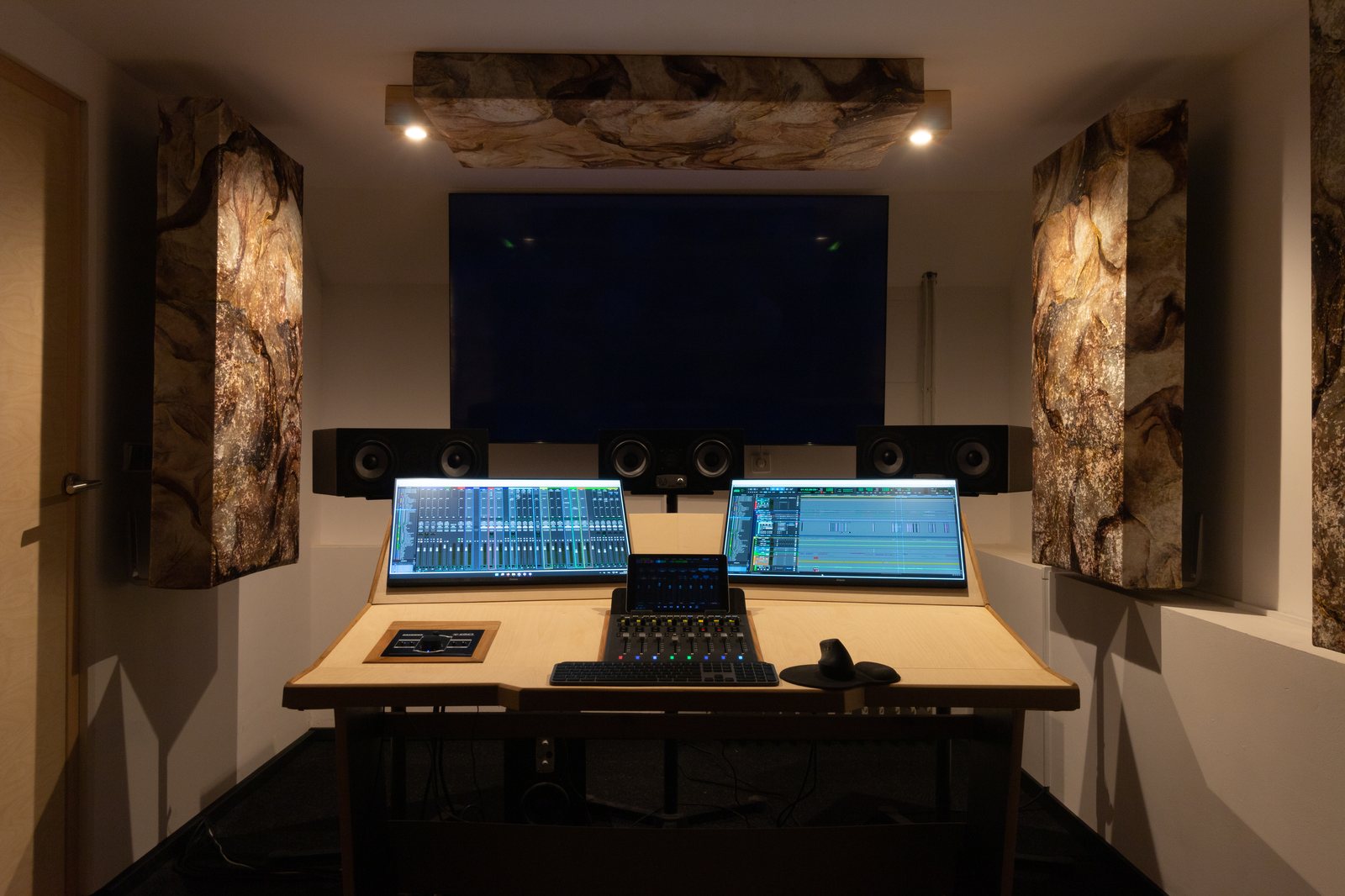
Good sound design is a combination of technology and creativity. The foundation is an extensive sound library and one’s own field recordings, but the real work begins in processing these sources. The sound designer layers many sounds, changes their pitch, slows them down, filters them and synthesizes new sounds until an effect emerges that cannot be recorded directly. At All In Sound we do this in Pro Tools Ultimate, drawing on a 4 TB library, and we make decisions on Eve Audio and Genelec monitors in an acoustically controlled space. Controlled monitoring is key here — only on good monitors can you hear the details that get lost on ordinary speakers.
Sound design vs advertising and branding
Sound design is not reserved for cinema. In advertising, a few well-chosen effects can make a product look more expensive and more desirable. More and more brands are also investing in a sound identity — a coherent set of sounds accompanying a logo, an app or a campaign. If a project calls for an original score, we combine sound design with music production .
Summary
Sound design is the invisible but crucial layer of every audiovisual production. It crafts the sounds that are not in the frame and builds them into a coherent, moving world. Good sound design is unnoticeable — it simply makes everything sound the way it should.
Want your project to sound its fullest? Discover our sound design service or see the full range of sound post-production services.
Frequently asked questions
What is sound design?
Sound design is the crafting and creation of sounds that were not recorded on set — effects, ambiences, textures and the sonic space. Its goal is to build a coherent, believable and emotional sound world for a film, game, animation or advertisement.
How does sound design differ from the mix?
Sound design is about creating and selecting individual sounds and effects. The mix is the balancing of all the finished layers — dialogue, music and effects — into one coherent whole. Sound design creates the elements, the mix combines them.
What is sound design needed for?
Sound design gives images depth and emotion. It builds tension, underscores the action, makes the depicted world believable and guides the viewer’s attention. Without it, even a well-shot film sounds flat and incomplete.
Does sound design only apply to films?
No. Sound design is used in films, series, animation, advertising, video games, installations, podcasts and brand sound identities. Everywhere sound is meant to build impression and emotion.
How does sound design differ from sound editing?
Sound editing organizes and synchronizes existing material — laying dialogue and recorded sounds out in time. Sound design creates and selects new sounds that were not in the recording. Editing arranges what already exists; sound design adds what is missing.
How long does sound design take?
It depends on the length and complexity of the material. Sound design for a short spot usually takes a few days, while a feature film or series can take several weeks. We give the exact timeline after viewing the edited material.