

What is sound post-production? A guide
In short: Sound post-production is the set of work on a film or advertisement’s audio layer carried out after shooting wraps — dialogue editing and cleaning, sound design, voice recording, music, and mix and mastering. Its goal is to build a coherent, clear soundtrack that complies with broadcast standards. It is what makes a film sound professional and makes the viewer believe what they see on screen.
The image draws the eye, but it is sound that builds emotion and believability. A viewer will forgive an imperfect frame, but a badly mixed, noisy line of dialogue instantly pulls them out of the story. That is why sound post-production is one of the most important stages in the making of any film, advertisement or animation.
Sound post-production — definition
Sound post-production covers all the processes related to the audio layer that are carried out after shooting wraps. The material recorded on set is only a starting point. It is in the studio that the full, multi-layered soundtrack is created: cleaned up, enriched with effects and music, and finally mixed and mastered for its intended broadcast.
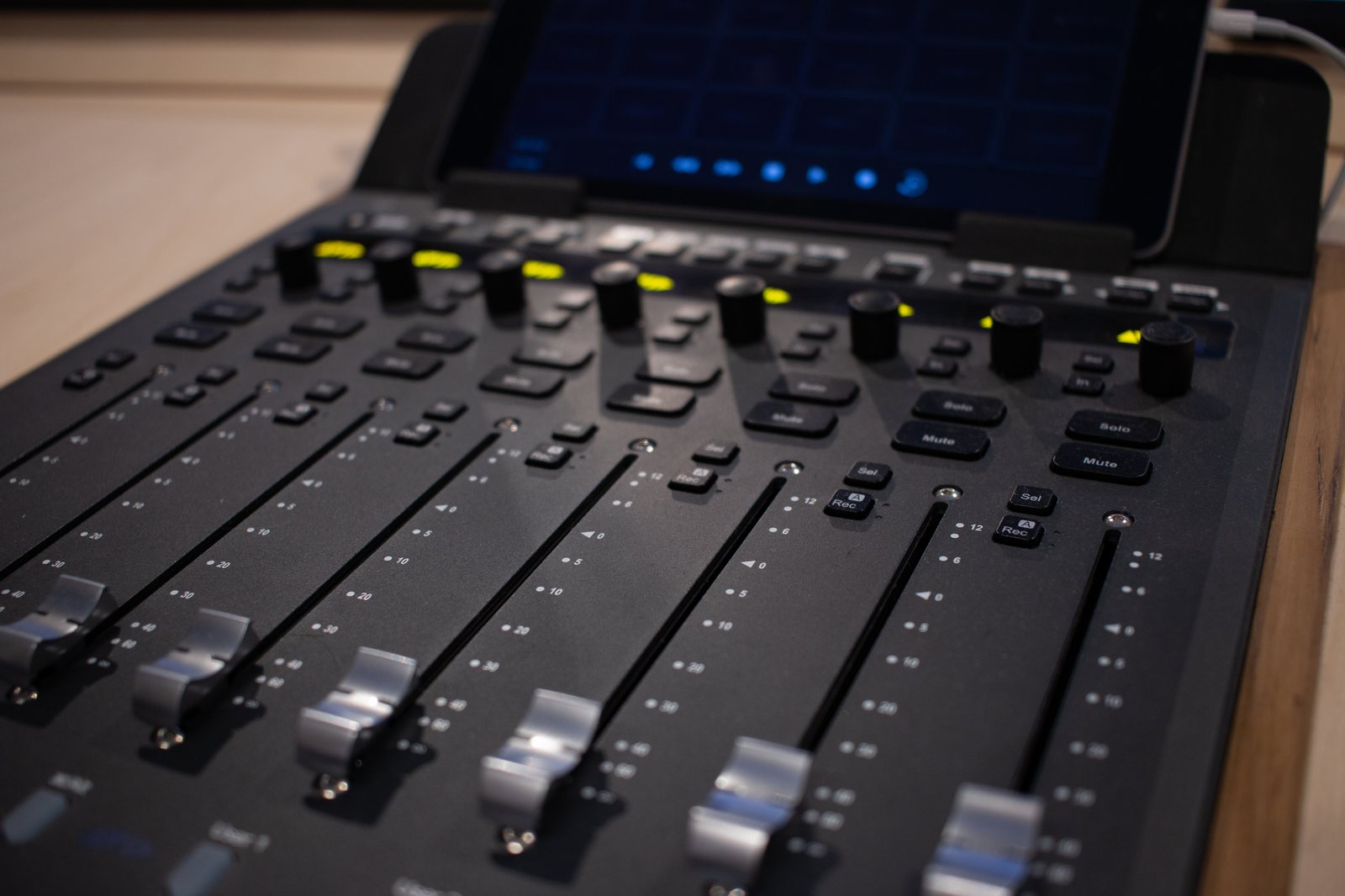
At All In Sound we work in Pro Tools Ultimate in a 5.1 studio with controlled acoustics, on Eve Audio and Genelec monitors. This environment lets us make precise sound decisions that cannot be heard on ordinary speakers or headphones.
What stages does sound post-production consist of?
Although every project is different, a typical process runs through a few recurring phases.
1. Dialogue editing and cleaning
The first step is to tidy up the dialogue recorded on set. We remove noise, crackle and unwanted backgrounds, level out volumes and pick the best takes. If the on-set material is beyond saving, we turn to audio restoration or dialogue re-recording (ADR).
2. Sound design and effects
At this stage we build the film’s sound world — from footsteps and city noise to effects designed from scratch. Sound design draws on our 4 TB library and our own recordings. It is what gives scenes depth and rhythm.
3. Voice and voice-over recording
Many projects require added narration or language localization. We handle voice and voice-over recording in a directed booth, on a Neumann TLM 102 microphone, in PL, FR, EN and ES.
4. Music
Music can be composed specifically for the project or selected from a library. Our team also handles music production when a project calls for an original score.
5. Mix and mastering
This is the finale of post-production. All the layers — dialogue, effects, music — are combined into one coherent whole, then mastered for the target format (cinema, TV, online). We write more about the difference between these stages in the article on mix vs mastering .
Why does the sound layer require a separate stage?
On set, the priority is the image, good acting and efficient shooting. Sound recorded under these conditions is burdened with compromises: the microphone picks up ambient noise, room echoes, equipment hum and stray sounds. On top of that, many elements of the depicted world do not exist at all during shooting — there is no music yet, effects are missing, and the location’s ambiences have to be built from scratch. Post-production is therefore not so much “fixing” the on-set sound as creating the full audio layer practically from the ground up. That is why it is treated as a distinct, creative stage of production, not a technical add-on.
Who works on the sound?
Sound post-production is the responsibility of a team of specialists. At All In Sound, Olga handles dialogue editing, ADR and sound editing — she has worked with Nicolas Becker and as an ADR and dialogue editor on productions such as Lupin, Infiniti and 80 Days. Yohan Boisgontier is responsible for the mix and music production. The team works in Polish, French, English and Spanish, which makes international projects and the preparation of language versions easier. We have delivered sound for projects for Netflix, Prime Video, BBC and France TV.
Why invest in sound post-production?
- Believability — clean, well-mixed sound makes the viewer believe the image.
- Emotion — sound design and music steer tension and pace.
- Technical compliance — mastering guarantees correct loudness on every platform.
- Reach — professional language localization opens a project to new markets.
When should you plan sound post-production?
The best results come when sound is considered as early as the production planning stage, rather than only once the picture is edited. Deliberately recording clean dialogue on set, gathering additional ambient sounds or leaving room for music significantly eases the later work in the studio. In practice, sound post-production begins once the picture edit is locked (picture lock), because any change to the image forces corrections in the synchronized soundtrack. It is therefore worth reserving real time for it in the schedule rather than treating it as a last, rushed formality.
How much does sound post-production cost?
Prices depend on the length of the material, the mix format (stereo or 5.1), the scope of sound design and the number of language versions. As a rough guide, a short advertisement starts from a few thousand złoty, while full film projects are quoted individually. Prices are approximate — we quote every project separately. It is best to send the material and a description of your needs — we will prepare a specific quote. You will also find details in the article on how much sound design and a film mix cost .
Summary
Sound post-production turns raw recordings into a finished, moving soundtrack. It is a process made up of editing, sound design, voice recording, music, and mix and mastering — and each of these stages shapes how the final work is received.
Planning a film, advertisement or animation? Get in touch or check out the full range of sound post-production services at All In Sound.
Frequently asked questions
What is sound post-production?
Sound post-production is the set of work carried out on the audio layer after shooting wraps: dialogue editing, additional recordings, sound design, music, mix and mastering. Its goal is to create a coherent, clear and emotional soundtrack that complies with broadcast standards.
What stages does sound post-production consist of?
A typical sound post-production runs through five stages: dialogue editing and cleaning, sound design and effects, voice and voice-over recording, music, and mix and mastering. The order can be flexible, but mix and mastering always close the process, combining every layer into the finished soundtrack.
How long does sound post-production take?
A short advertisement is usually a few days’ work, while a feature film or series takes weeks. The time depends on the length of the material, the number of scenes requiring sound design, and the number of language versions and mix formats.
How does post-production differ from sound production?
Sound production happens on set — it is the recording of dialogue and sounds during shooting. Post-production is everything that happens afterwards in the studio: cleaning, editing, sound design, mix and mastering.
Do I need sound post-production for a short advertising film?
Yes. Even a 30-second advertisement benefits from a professional mix and sound design — clean dialogue, consistent loudness and well-chosen effects build brand credibility and hold the viewer’s attention.