

Dolby Atmos, 5.1 or stereo — the surround mix
The choice between stereo, 5.1 and Dolby Atmos is not a question of “better or worse”, but of matching the format to where and how the viewer will hear your material. A social media advertisement, a film for a VOD platform and a podcast have completely different needs. We explain the differences and suggest what to choose.
The three formats in brief
Stereo (2.0)
Two channels — left and right. It is the most universal format: it works everywhere, from headphones to the television. It is ideal for online advertising, podcasts, music and most online content, where the viewer listens on two speakers or headphones anyway.
Surround 5.1
Six channels: three at the front (left, centre, right), two at the rear (surround), and a low-frequency channel (the subwoofer — that is the “.1”). The sound surrounds the viewer on the horizontal plane. This is the home cinema standard and the basic surround format required by many VOD platforms for films and series.
Dolby Atmos
A step beyond 5.1. Instead of thinking in channels, Atmos works with sound objects — a single sound (e.g. a passing plane) is placed in 3D space, and the system itself distributes it across the available speakers, adding a height layer (speakers above the viewer). As a result, the same mix sounds optimal both in a cinema hall with dozens of speakers and on headphones with virtualization.
Which format to choose — distribution decides
The choice is driven not by ambition, but by where the material will go:
- Online advertising, podcasts, social media → stereo. Simple, universal, in line with how the audience listens.
- Film, series, documentary for VOD platforms → most often 5.1, and for premium productions increasingly Dolby Atmos. The large broadcasters we have delivered sound for — Netflix, Prime Video, BBC, France TV — have precise technical requirements for the format and the versions delivered.
- Cinema → a surround mix, usually 5.1 or Atmos, depending on the distribution.
Usually it is not a matter of “either–or”: a stereo version (downmix) is also prepared from the surround mix, so the material works on every device.
Downmix — why it is not automatic
Converting 5.1 or Atmos to stereo seems like a simple click, but a good downmix requires control. You have to make sure the dialogue from the centre channel stays intelligible and the balance does not fall apart on two speakers. A badly done downmix can lose the dialogue or clip — which is why we watch it by hand at the mix stage.
Common misconceptions
A few myths have grown up around surround formats that are worth setting straight:
- “Atmos always sounds better than stereo” — not in every context. If the audience is listening on a phone, well-made stereo will give them more than poorly used Atmos.
- “Just record in stereo, a converter will do the rest” — you cannot make believable 5.1 out of stereo. Space is built from the start, with properly prepared tracks.
- “A surround mix is just scattering sounds across the speakers” — in practice it is about dialogue intelligibility, bass control and consistency of sound after the downmix, not about showing off.
That is why we settle the format at the start of a project, before the mix — changing your mind halfway through means a lot of extra work.
Mix vs mastering — let’s not confuse the terms
The surround format is a matter of the mix — that is, building the space and balance. A separate matter is mastering, the final adjustment of loudness to platform standards (e.g. EBU R128 for broadcast). If these terms blur together for you, we explain them in the article on mix vs mastering .
How we work on a surround mix
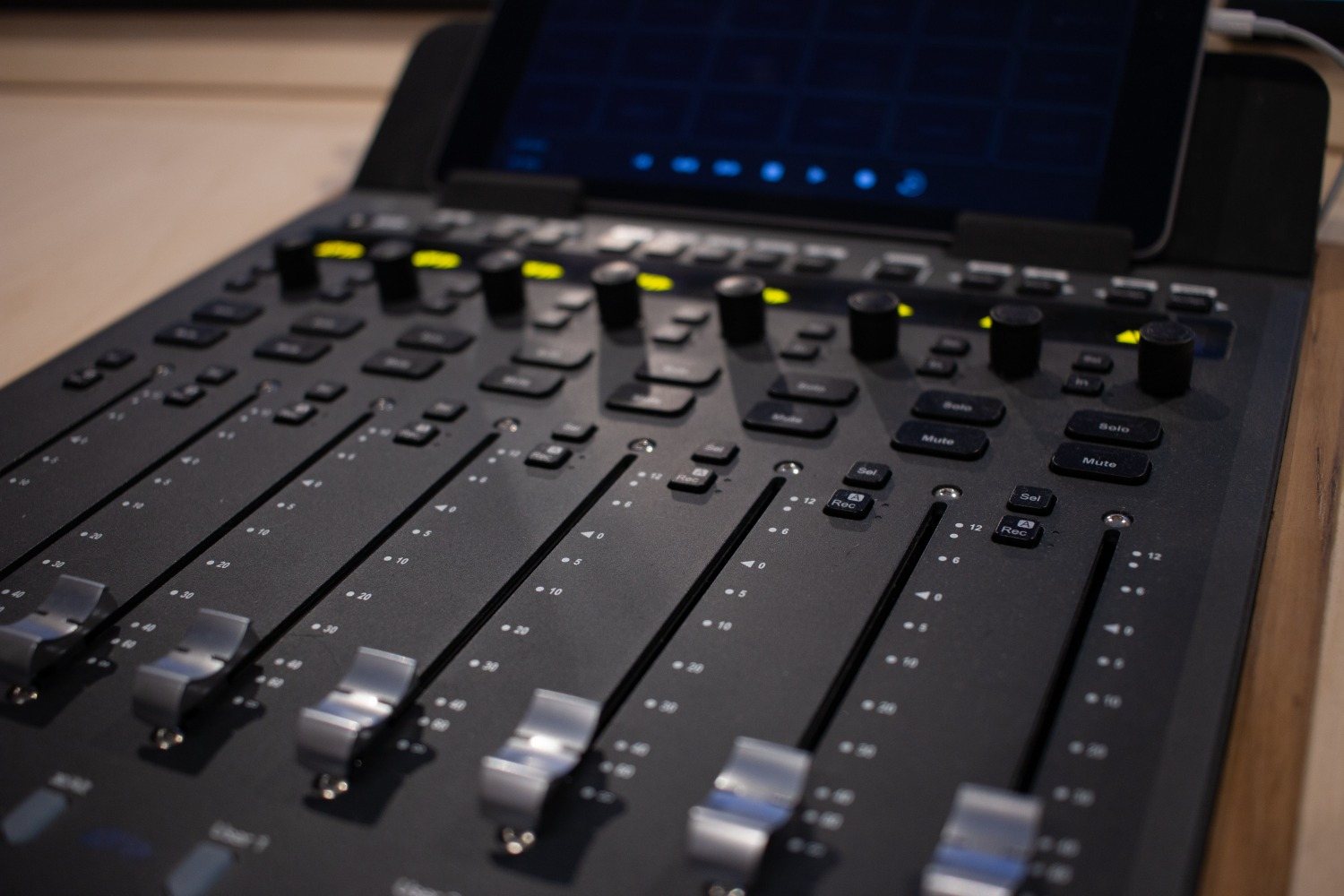
Our editing and mixing room is configured for 5.1 monitoring on Eve Audio and Genelec monitors, and we do everything in Pro Tools Ultimate on an Avid S1 surface. Yohan Boisgontier handles the mix and the surround here. We deliver the full set of versions — surround plus stereo — together with mastering for the target platforms, in line with their technical requirements.
How much does a surround mix cost?
A 5.1 or Atmos mix is more labour-intensive than stereo, so the quote is higher too — but it all depends on the length and complexity of the material. We give this as a guide only; a specific estimate we will prepare after viewing the project and settling the required delivery formats.
Summary
Stereo for online content, 5.1 for films and series on VOD, Dolby Atmos for premium productions and cinema — plus a stereo version as a downmix, so the material works everywhere. The key is to decide on the format before the mix, knowing the requirements of the target platform.
Not sure which surround format to choose for your production? Write to us or call +48 602 736 922 — we will match the format to your distribution.
Frequently asked questions
How does 5.1 differ from Dolby Atmos?
5.1 is six channels arranged around the viewer on the horizontal plane. Dolby Atmos adds a height layer and works with sound objects that the system places in 3D space independently of the number of speakers.
Do VOD platforms require a surround mix?
Large platforms like Netflix or Prime Video often require a 5.1 mix, and increasingly Dolby Atmos for premium productions. A stereo version is usually delivered as well, as a downmix.
Is stereo enough for an advertisement or a podcast?
Yes. Online advertising, podcasts and most online content are consumed in stereo or on headphones, so a well-prepared stereo mix is optimal there.
Can you make stereo out of a 5.1 mix?
Yes, through what is called a downmix. It is not, however, an automatic click — a good downmix requires control so that dialogue and balance sound correct on two speakers too.