

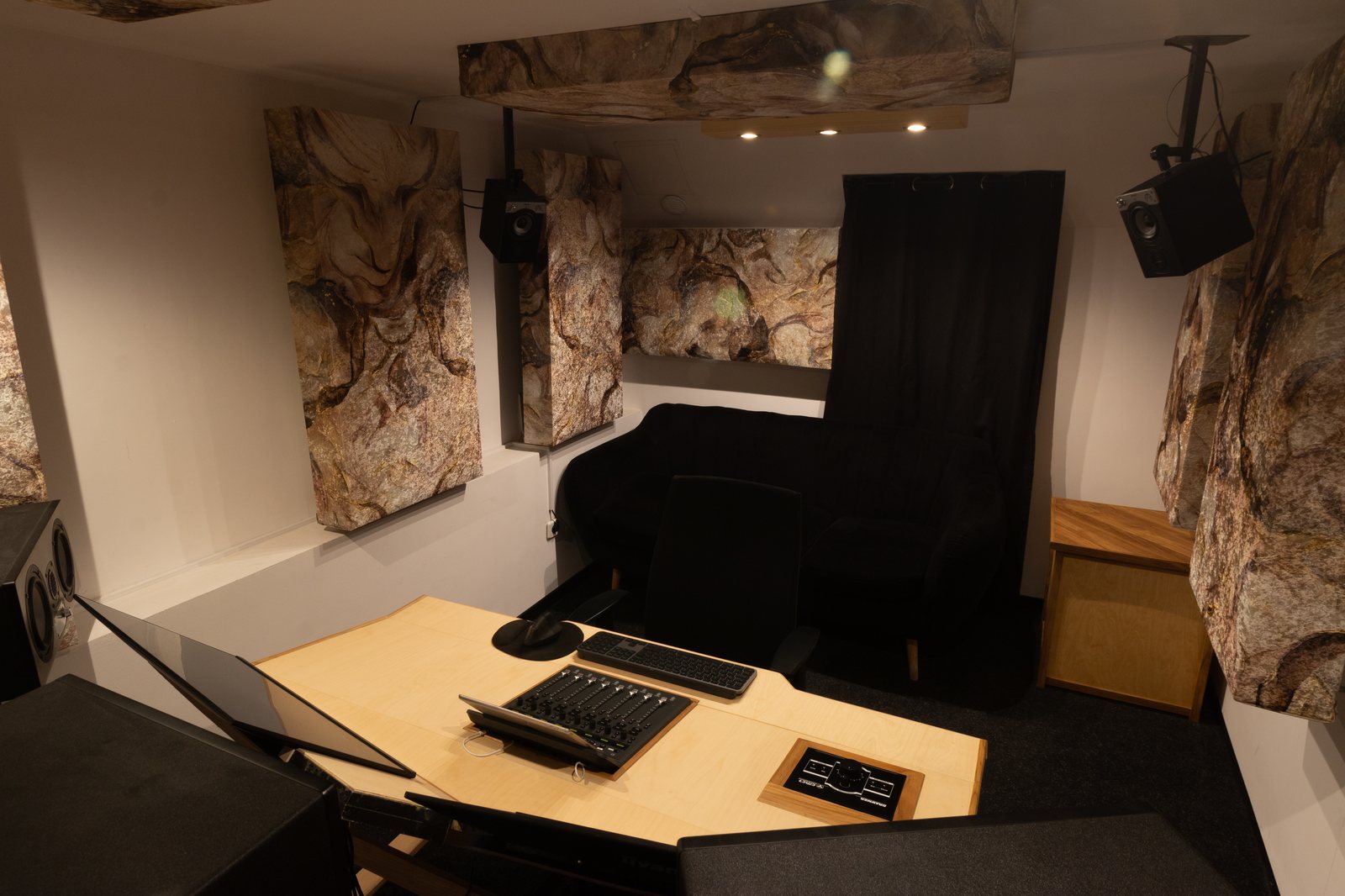
Foley — how sound effects are made in film
Foley is the art of recording sound effects live — footsteps, the rustle of a coat, the jangle of keys — in perfect sync with the picture. Most of the sounds you hear in a film apart from dialogue do not come from the shoot. They were created later, in the studio, made by hand by a Foley artist.
Where the name comes from
The term comes from Jack Foley, a Universal Studios sound man who in the 1920s and 1930s developed the method of re-recording sounds in sync with the projection. His surname gave the whole field its name, and the person who records them is a Foley artist.
The idea is simple, though the execution takes skill: the artist watches a scene and reproduces its sounds with their own body and props — walking in the character’s shoes, touching the same materials, opening a door at the same moment as the character on screen.
Why on-set sound isn’t enough
On a film set the microphone is set up for one goal: clean dialogue. Everything else — footsteps, the brushing of clothing, setting down a mug — is incidental, too quiet or distorted. What is more, with post-sync and dialogue re-recording the original track often disappears altogether, and with it the entire background. Foley rebuilds this layer from scratch, giving the director full control over what sounds and how loudly.
The three basic categories of Foley
- Footsteps — the most frequently recorded category. A heel on cobblestones sounds different from a trainer on parquet, and different again from a bare foot in mud. The artist usually has a whole collection of shoes and various surfaces.
- Clothing and movement (moves) — the rustle of a jacket, the creak of leather, the friction of fabric with every gesture. These are what make a character feel physical rather than “pasted” into the frame.
- Props (specifics) — everything the character touches: keys, a cup, a weapon, a door handle, sheets of paper. Every object has its own distinctive sound.
What a Foley session in the studio looks like
1. Scene analysis
We start by watching the material and listing which sounds need to be reproduced. We decide what we will build as Foley and what we will source from the 4 TB library — for example, distant city backgrounds are usually easier to take from a library than to reproduce by hand.
2. Choosing props and surfaces
We assemble shoes, materials and objects. Sometimes the best sound comes from something completely different from what is on screen — the crunch of a broken lettuce can play as a breaking bone.
3. Recording to picture
The artist reproduces the sounds in sync with the projection, and we capture them with a precise Neumann TLM 102 microphone. We record each layer — footsteps, clothing, props — separately, so we can mix them independently later.
4. Editing and folding into the mix
In Pro Tools Ultimate we nudge each sound frame by frame, level it out and place the Foley in the scene’s space — adding reverb that matches the interior, adjusting perspective. The effect is meant to be inaudible in the sense that the viewer does not notice the work, only believes in the world on screen.
Foley versus a sound library
A natural question arises: if we have a library of millions of ready-made samples, why record anything by hand? The answer lies in sync and detail.
- A library works great for background sounds and single, repeatable effects — distant city, rain, general murmur. It is fast and cheap.
- Foley wins wherever a sound has to sit perfectly in a character’s movement — footsteps matched to a particular gait, the rustle at every gesture, touch exactly at the moment of contact.
In practice we combine both approaches: key, “close” sounds we record as Foley, and backgrounds and secondary layers we fill in from the library. This hybrid gives the best quality-to-cost ratio — and it is how sound is built in most productions, including those for large platforms.
Foley vs sound design
Foley is part of a broader process called sound design — the building of a production’s entire sound layer. While sound design also covers designed effects, ambiences and space, Foley is specifically responsible for those “human”, physical sounds produced by characters and objects. If you want to understand the full context, take a look at the post on what sound design is .
How much does Foley cost?
The price depends on the length of the material and the number of scenes requiring live recording — it is one thing for a single advertisement, another for a feature film. We give this as a guide only; we will prepare an exact quote after viewing the material. Call +48 602 736 922 or write via the contact form .
Summary
Foley is the invisible foundation of a film’s soundtrack — the layer that makes footsteps sound, clothing rustle and the world on screen seem real. Recorded live and synchronized with the picture, it is what a sample library cannot replace in the key scenes.
Working on a film or advertisement that needs a polished layer of effects? Write to us — we will show you what we can build.
Frequently asked questions
What is Foley?
Foley is the technique of recording sound effects live, in sync with the picture — footsteps, the rustle of clothing, the handling of objects. The name comes from Jack Foley, the Hollywood pioneer of the method.
How does Foley differ from a sound library?
Foley is recorded specifically for a given scene, so it fits the on-screen movement perfectly. A library is ready-made samples — faster, but less precise for details like footsteps or touch.
Does every film need Foley?
Feature films, premium advertisements and animation almost always. For simpler productions some effects can be built from a library, with Foley reserved for the key scenes.
Why isn't the on-set sound enough?
The microphone on set mainly picks up dialogue. Footsteps, clothing and small sounds are usually too quiet or drowned out, so they are re-recorded separately to make the scene come alive.