

How much does mastering cost?
In short: There is no single price for mastering — the cost depends on the number of tracks and their length, the format (stereo or 5.1), the type of material (music, film, advertisement, podcast) and the number of revisions. That is why we do not publish a fixed price list but prepare an individual quote once you send the material and we listen to it. We also handle mastering online — remotely, with rounds of revisions.
“How much does mastering cost?” is one of the most common questions we hear. There is no single answer, because two seemingly similar projects can differ in the effort involved. Below we explain what really affects the price of mastering, how online mastering works and exactly what you get.
What affects the price of mastering?
Number of tracks and length of the material
The basic factor. Mastering a single is a different amount of work than a whole album or EP, and a few-minute track is different from a half-hour podcast episode. The more material and the longer the tracks, the more hours of listening and finalizing are involved.
Format — stereo or 5.1
Mastering in 5.1 is more labour-intensive than stereo, because it requires controlling the sound in space and working in a 5.1 studio with controlled acoustics. The target format — streaming, cinema, TV — therefore directly affects the cost.
Type of material
Music is mastered differently from film or advertisement sound, and a podcast differently again. Each has different tonal goals and different loudness standards, as we describe below.
Number of revisions and versions
Every round of notes, plus additional versions (e.g. a separate master for streaming and for CD), increases the workload. It is worth agreeing up front how many rounds of revisions the quote covers.
State of the mix
Mastering works on a finished, balanced mix and will not fix mistakes made earlier. A well-prepared mix shortens the work, while a problematic one may require going back to the mixing stage — a relationship we explain in the article on mix vs mastering .
Mastering for music, film, advertising and podcasts
Although the principle is the same — finalizing the finished material for delivery — the goals differ by project type. In music, mastering levels the tracks across an album or EP so that they form a coherent whole and sound good on streaming platforms. In film and advertising, it ensures compliance with broadcast standards for cinema and television and consistency between scenes, often in the spatial 5.1 format. In a podcast, the key is speech intelligibility and stable, even loudness across the whole episode. Each of these is a different amount of work, which is why we quote them individually.
Online mastering — how does it work?
You do not have to be in Warsaw to use mastering. Online (remote) mastering means you send us your finished mix over the internet, we work on it in the studio in Żoliborz, and you receive the mastered files and versions to review. You submit your notes remotely, and we apply the revisions in agreed rounds. We run the whole process — from sending the material to the final files — without a studio visit, though of course you are welcome on site if you prefer to work at the monitors.
What you get — formats and standards compliance
The result of mastering is finished files matched to the target platform and meeting the applicable loudness standards:
- Music streaming — a level in line with platform practice (roughly around −14 LUFS), so the material is not normalized down excessively.
- Podcast — speech levelled to the podcast standard (roughly around −16 LUFS) for stable, comfortable listening.
- Film and television — compliance with the EBU R128 standard and the broadcaster’s requirements.
- File formats — export in WAV/AIFF at the required resolution, in stereo or 5.1, together with any additional versions.
We make sure the material sounds equally good on phone headphones, in a cinema and on a streaming platform, and meets the technical requirements of the outlet.
Why don’t we publish a fixed price list?
We do not give a single per-track rate, because two seemingly similar projects can differ in the effort involved — the number and length of tracks, the format, the type of material, the state of the mix and the number of revisions all count. A reliable figure can only be given after listening to the material. So rather than guessing from a price list, we prepare an individual quote once you send the material — that way it reflects the real scope of the work.
Why invest in professional mastering?
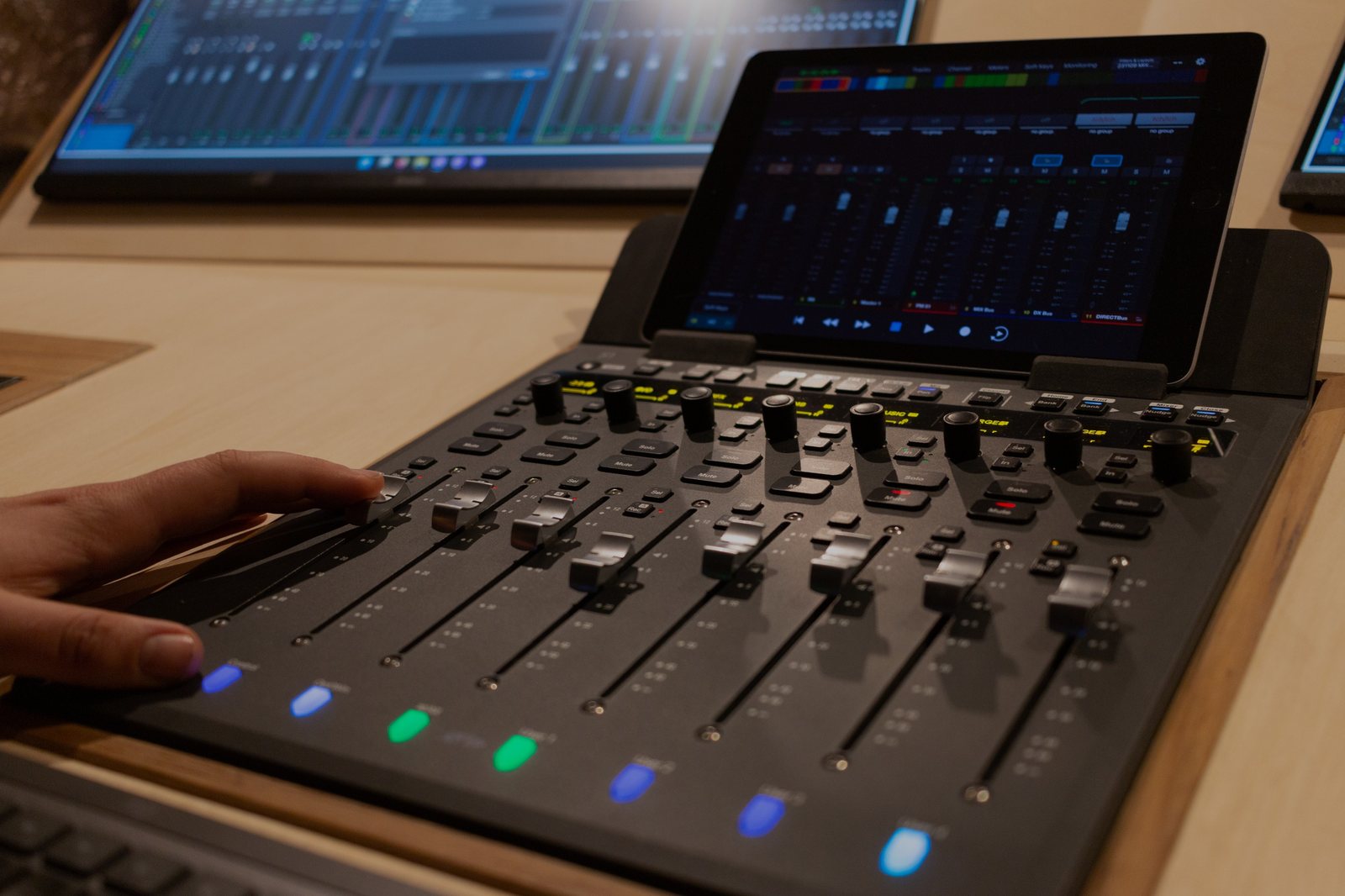
- Conditions — a 5.1 studio with controlled acoustics, Eve Audio, Genelec and Mackie HR824 monitors, an Avid S1 console and Pro Tools Ultimate are monitoring conditions that cannot be reproduced on ordinary equipment.
- Experience — mastering is handled by Yohan Boisgontier, who is also responsible for the mix and music production with us.
- Comprehensiveness — mix, mastering, sound design and music are all handled in one studio, so the transition between stages is smooth.
How to prepare for a quote
Send us the finished mix (or a description of it): the number of tracks, the total length, the format (stereo or 5.1), the type of material and the target platform. It is best to deliver the material as a WAV or AIFF file at its original resolution, with no limiter on the master bus and some headroom on the peaks. On this basis we will prepare a specific, individual quote.
Summary
The cost of mastering is the resultant of the number of tracks and their length, the format, the type of material and the number of revisions. Rather than guessing from a price list, it is best to send the material — then we will give a real figure tailored to the project, including remotely.
Want to know the cost of your project? Check out the mastering service, or get in touch for an individual quote.
Frequently asked questions
How much does it cost to master one track?
There is no single price for mastering one track — it depends on the length and format of the material (stereo or 5.1), the type of project and the number of revisions. That is why we do not publish a fixed per-track rate, but prepare an individual quote once you send the material.
What is the difference between the mix and mastering?
The mix balances all the layers of sound into one coherent whole, while mastering is the final treatment of the finished mix for its target delivery and compliance with loudness standards. The mix comes first, then mastering — two different, consecutive stages.
Do you offer online mastering?
Yes. Online mastering means you send us your finished mix over the internet, we work on it in the studio, and you receive the mastered files and versions to review. You do not have to be in Warsaw — we run the whole process remotely, with rounds of revisions.
In what format should I deliver material for mastering?
It is best to send the finished mix as a WAV or AIFF file at its original resolution (e.g. 24 bit), with no limiter on the master bus and some headroom on the peaks. Also state the target use — streaming, cinema, TV or podcast — as this determines the loudness standards and export format.
What does the price of mastering depend on?
The most important factors are the number of tracks and their total length, the format (stereo or 5.1), the type of material (music, film, advertisement, podcast) and the number of rounds of revisions. The larger the scope and the higher the technical requirements, the more work involved.
Do you have a fixed price list for mastering?
No, we do not publish a fixed price list, because two seemingly similar projects can differ in the effort involved. We give a reliable figure after receiving and listening to the material — that way the quote reflects the real scope of the work.
How do I get a mastering quote?
Send us the finished mix or a description of it: the number of tracks, the total length, the format and the target platform. On this basis we will prepare a specific, individual mastering quote.