

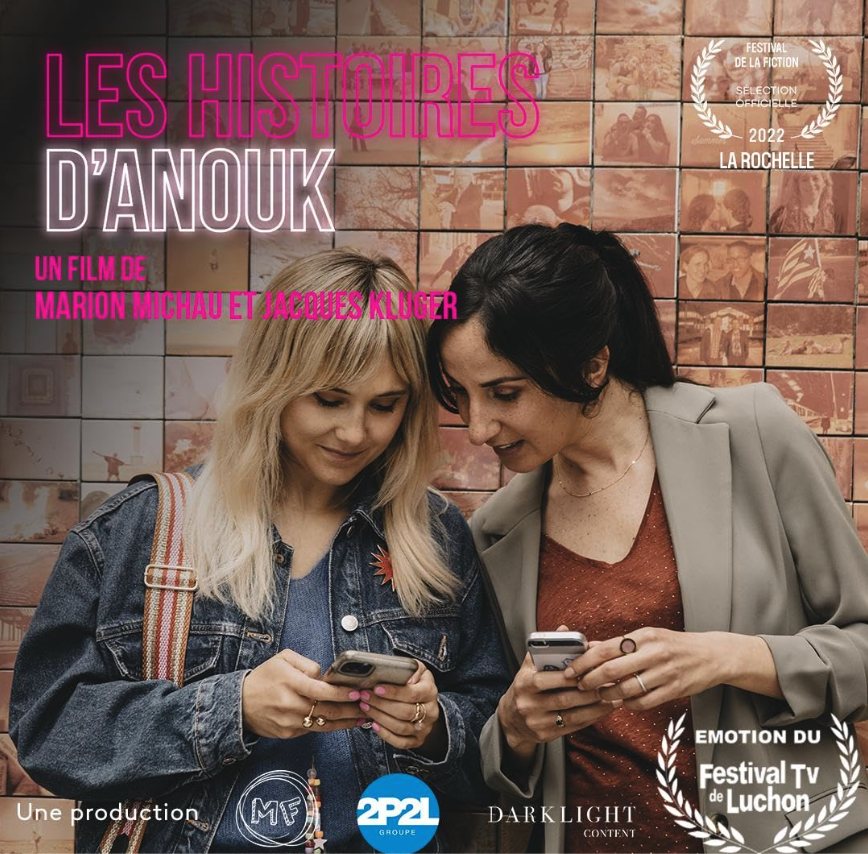
Les Histoires d'Anouk — sound (France TV)
Les Histoires d’Anouk is a production made for France Télévisions — the French public broadcaster. Working for public television has its own rules: clarity, consistency and full compliance with technical broadcast standards, because the audience is broad and diverse, watching in very different conditions.
The craft of sound editing in television
Sound post-production for a television production rests on several foundations that have to work reliably, episode after episode and scene after scene. It is usually carried out by a whole sound team, in which each person is responsible for their own part of the work.
The foundation is dialogue editing. In a production where the story is carried by the characters and their relationships, the dialogue must be crystal-clear and natural. The sound editor orders the tracks from the set, removes noise, evens out inconsistencies between shots and records the details, so that every line sounds free even once combined with music and background. It is the least showy and often the most important part of the work.
To this are added ambiences, effects and Foley. Even an intimate story needs a credible space: interior backgrounds, sounds from outside the window, subtle details that build a sense of place and time. A well-prepared background is unnoticeable and yet makes the viewer fully enter the world of the production. Hand-recorded Foley effects — footsteps, touch and objects — restore to the scene the physicality lost in the edit.
All of this leads to a mix compliant with the broadcaster’s standard. Public television defines precise delivery parameters — loudness levels, the format and the way the tracks are prepared. The material must meet these requirements down to the last detail, while at the same time maintaining the artistic balance between dialogue, music and effects. The viewer is meant to hear every word clearly and feel the emotion of the scene, whether they are watching on a large television or on a tablet.
The experience we bring to All In Sound
On Les Histoires d’Anouk, Olga worked as a sound editor — as part of a larger sound team on the France TV production side. It is work at the base of the post-production chain: cleaning and ordering the dialogue, caring for the intelligibility and consistency of the sound, and preparing the material for the following stages.
It is exactly this kind of experience — sound editing on French television productions — that Olga now brings to All In Sound. Working with the French market is a natural environment for us: our team has worked between Paris, Warsaw and London and uses French every day, and knowing what a public broadcaster expects translates directly into the quality of our work.
We work in a 5.1 editing room at a standardised monitoring level, which lets us control the intelligibility of the dialogue with full precision. On television productions, reliability matters most: a coherent, clear sound delivered on time and compliant with broadcast requirements.
Making a production for television or a platform and looking for a studio to handle the sound to the broadcaster’s requirements? See our projects and write to us .
Frequently asked questions
What is sound post-production for public television?
It is sound work that complies with the broadcaster’s technical requirements — loudness levels, delivery format and broadcast standards. The dialogue must be clean and intelligible, because France TV productions are watched by a broad, diverse audience.
What does sound editing on such a production involve?
Ordering the tracks from the set, cleaning and evening out the dialogue, building ambiences and effects, and preparing the material for the later stages of post-production. It is usually carried out within a larger sound team.
What was Olga's role on Les Histoires d'Anouk?
Olga worked on this production as a sound editor, as part of a larger sound team on the France TV production side. It is experience from her career that she now brings to her work at All In Sound (see IMDb).