Sound mix and mastering — Warsaw
Sound mix and mastering for film in Warsaw: a 5.1 studio with controlled acoustics, Eve Audio monitors, Avid S1 console. Compliant with broadcast standards.
Mixing and mastering is the stage where the finished elements of the soundtrack — dialogue, music and effects — come together into a single, polished whole. This is where it is decided whether the viewer will hear every word, feel the space of a scene and be carried away by the emotion. We offer mix and mastering in Warsaw in a studio working in a 5.1 configuration with controlled acoustics, which allows precise sonic decisions to be made.
We deliver sound mixes for film, commercials, animation, series and podcasts — in stereo and surround. We balance the individual layers, build depth and plan the panorama, and then master the material so that it sounds great and meets the broadcast standards for cinema, television, radio and online platforms.
Controlled acoustics and a tuned listening position are crucial: without a trustworthy environment, even the best mixing decisions fall apart on the target playback systems. Our studio provides a repeatable, neutral picture of the sound that you can rely on.
What is a mix, and what is mastering
These are two distinct, consecutive stages. The mix consists of balancing all the layers of sound against one another — setting the proportions of dialogue, music and effects, levelling, tonal correction, adding space (reverbs) and planning where in the sound field each element will sit. The goal is legibility and emotion: dialogue should be intelligible, music should support the scene, and effects should build the world on screen.
Mastering is the finalisation of the finished mix for a specific broadcast. At this stage we bring the material into compliance with loudness standards, control the peaks and dynamics, ensure consistency between scenes and prepare technically correct delivery files. Mastering does not “save” a bad mix — it tidies up a good mix and prepares it for the world in which it will be played. In practice the two stages intertwine in our work: a deliberate mix takes the target standard and broadcast channel into account from the outset, so that finalisation proceeds predictably and the material sounds just as good on a large screen as it does on headphones or through a television speaker.
Stereo and 5.1 (surround) mixing
The choice of format depends on the distribution channel. A stereo mix works for most online content, internet advertising and podcasts. A 5.1 mix is the standard for cinema and television — five full-range channels and a low-frequency channel (LFE) let you spread dialogue, music and effects out in space, separate the planes and build a fuller, more immersive experience.
In a broader context there are also object-based formats, such as Dolby Atmos, which take the idea of surround sound even further. For most cinema and television productions, however, the starting point remains 5.1, and we designed our studio precisely around working in this configuration. It is worth remembering that a surround mix is not just “more speakers”: it means a different way of planning the sound stage, deliberately placing dialogue in the centre channel, effects in the surround channels and music in the front field. For online broadcast we usually additionally deliver a reduced stereo version, tonally consistent with the 5.1 mix. We write more about the differences in the post on Dolby Atmos, 5.1 and stereo .
How the process works
We work in a repeatable, transparent mode that gives control over the result at every stage:
- Session and stem preparation — we organise the delivered material, import the stems or session, sync the sound to picture by timecode and check that the layers are complete.
- Dialogue / music / effects balance — we set the proportions of the three main layers, prioritising above all the legibility and naturalness of the dialogue.
- Automation and space — we drive the levels precisely over time, plan the panorama and reverbs, and build the planes and depth of the scene.
- Mastering to standards — we finalise the loudness and dynamics in accordance with the required broadcast standard and control the peaks.
- Monitor check and export — we verify the mix on the studio monitors, check technical compliance and export the delivery files in the required formats.
After the first director’s playback we apply the agreed revisions, so that the final sound fully matches the production’s intent.
Standards and delivery formats
Broadcast sound has to meet the technical requirements of the channel. For television and online platforms, a common point of reference is the EBU R128 standard, which defines normalised loudness (LUFS) and a peak limit — thanks to it the material sounds even from scene to scene and from one production to another. We master in accordance with the standard required for a given market and platform.
As part of delivery we prepare stereo and 5.1 exports, as well as an M&E (music and effects) version without dialogue — the basis for dubbing and language versions. We take care of correct naming, file structure and metadata, so that the material passes technical QC at the broadcaster or on the platform without any obstacles.
Our studio
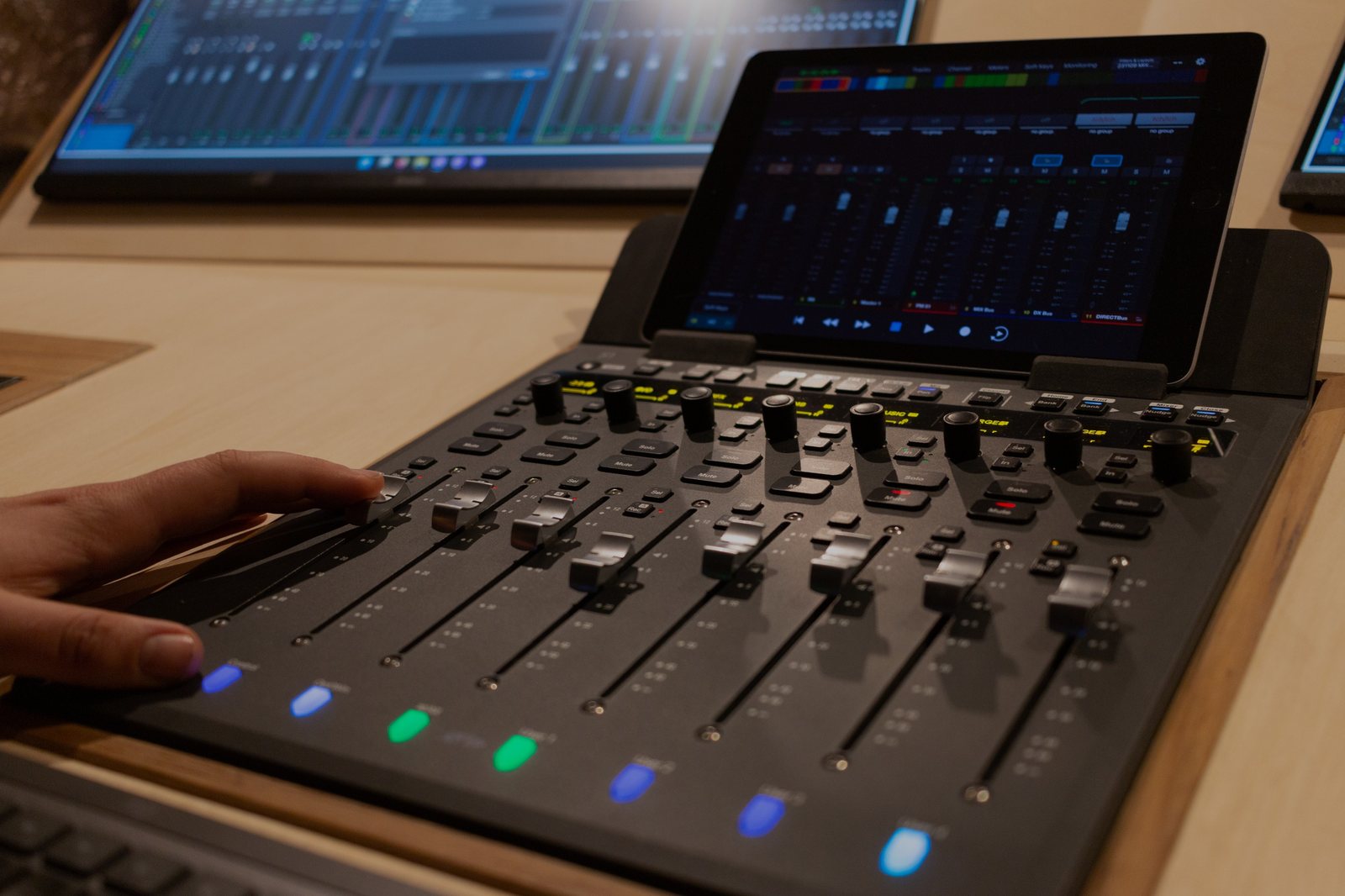
The mix is created in an environment designed for deliberate sonic decisions. The studio works in a 5.1 configuration with controlled acoustics and extensive room treatment, which gives a neutral, repeatable listen. The equipment includes Eve Audio monitors together with a pair of Mackie HR824, an Avid S1 control surface and a 4K screen for working with picture. At the heart of the system is Pro Tools Ultimate.
The mix and mastering are handled by Yohan, who works day to day with material for productions delivered, among others, to platforms and broadcasters such as Netflix, Prime Video, BBC and France TV. That experience translates into technical compliance and a sound that meets the standards of international distribution.
Order a mix and mastering
We combine the mix with sound design , voice recording and music production as part of comprehensive sound post-production . If you would first like to understand the differences between the stages, take a look at the posts mix vs mastering and what sound post-production is .
Send us your material — we will prepare a quote and a schedule tailored to the broadcast format. Get in touch and tell us about your project.
We also offer mastering as a standalone service — for music, film, commercials and podcasts.
Equipment
- Pro Tools Ultimate — 5.1 studio
- Controlled acoustics, extensive room treatment
- Eve Audio monitors + a pair of Mackie HR824
- Avid S1 control surface
- 4K screen for working with picture
- Stereo and 5.1 exports compliant with broadcast standards
Frequently asked questions
What is the difference between mixing and mastering?
The mix is about balancing all the layers of sound — dialogue, music and effects — into a coherent, legible whole, with the right depth and space. Mastering is the final processing of a finished mix for its target medium (cinema, TV, radio, online) and bringing the material into compliance with loudness standards and technical delivery requirements.
Do you deliver 5.1 mixes for cinema?
Yes. Our studio works in a 5.1 configuration with controlled acoustics, which lets us deliver both cinema and television mixes, surround or stereo — depending on the distribution channel.
What is EBU R128 and loudness standards?
EBU R128 is a European standard for normalised loudness, widely used in television and online broadcasting. It defines a target loudness level (LUFS) and a peak limit, so that the material sounds even from scene to scene and from one production to another. We master sound in compliance with the standards required for a given market and platform.
How much does a sound mix for a film or commercial cost?
The price depends on the length of the material, the format (stereo or 5.1), the number of tracks and the scope of revisions. Send us your project — we will prepare a quote and a schedule.
How many revisions are included in the price?
As standard, we include one round of revisions after the first director’s playback. The scope is agreed individually at the quoting stage, depending on the nature and volume of the project.
What should I prepare and in what format should I deliver the material?
It is best to work from stems or an organised session with separated layers (dialogue, music, effects), WAV files and a reference video with a burned-in timecode window. Such a complete package lets us work quickly and precisely.
Do you prepare language versions and M&E?
Yes. Alongside the full mix we deliver an M&E (music and effects) version without dialogue, which is the basis for dubbing and language versions, as well as stereo and 5.1 exports for the individual broadcast channels.
Who does the mix?
The mix and mastering are handled by Yohan Boisgontier in our 5.1 studio. We discuss the results with the director during the playback, so that the final sound matches the production’s intent.